Secure Sensing and Learning (SSL) Research Lab
Research Overview
We are interested in the security and privacy in smart connected devices and in digital interactions. The overarching goal of our research group is to create secure machine learning models for existing and upcoming technologies for various local and online applications. Our group is building methodologies to ensure user security and privacy in IoT devices and in online communications. We apply secure machine learning models in the areas of wearable devices, biometrics, attack-averse authentication, and side channel attack formulation.
Active Projects
Behavioral Biometrics for Active Authentication in Emerging Technologies
The work treats behavioral signals from ordinary MR interaction, including hand and controller kinematics, eye-movement dynamics, and head-pose trajectories, as biometric sources for identity verification. Rather than focusing on a single modality, this research develops a broader authentication paradigm centered on domain-informed modeling, cross-session evaluation across days and months, and compact architectures suitable for deployment on mobile XR devices. By studying both the reliability and practicality of these behavioral cues, this research aims to make active authentication viable for real MR platforms while preserving usability, privacy, and immersion.
User Authentication and Brain-Computer Interaction Using EEG Signals
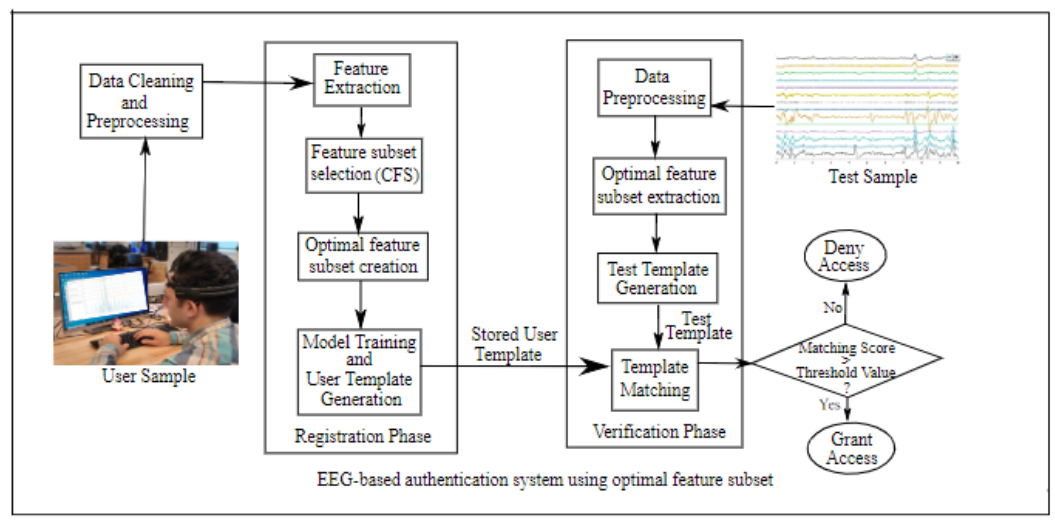
In the rapidly evolving realm of augmented reality (AR) and virtual reality (VR) systems, robust user authentication is vital due to the unique challenges posed by these immersive environments. Traditional authentication methods like PINs, passwords, facial recognition and fingerprints are proving inadequate and vulnerable to attacks. This vulnerability is further exacerbated by the nature of immersive environments, where users' attention is often diverted from external stimuli, making traditional authentication methods less reliable. Additionally, biometric methods face challenges such as susceptibility to presentation attacks, where adversaries attempt to deceive the system using fake biometric data, further emphasizing the necessity for advanced authentication mechanisms tailored specifically for AR and VR systems. This project aims to address these challenges by leveraging Electroencephalography (EEG) signals, which measure the electrical activity in a user's brain. The objective is to develop and revolutionize user authentication methods to both secure and enhance human-computer interaction within AR/VR environments. Additionally, the proposed effort includes educational activities for both undergraduate and graduate students; and activities for broadening participation in STEM fields. Through research, education, and outreach efforts, the project seeks to shape the trajectory of emerging technology toward a more secure and equitable digital landscape.
The goal of this work is to develop novel user authentication algorithms tailored specifically for AR/VR systems. The idea is to harness EEG signals of the user's brain to develop user authentication algorithms that are not only secure but also lightweight and user-friendly. By exploring how users' brains respond to various stimuli like visual cues or auditory prompts, the research seeks to create authentication methods that seamlessly integrate into the AR/VR experience. Through comprehensive analysis, including investigation into various attack models such as spoofing attacks, the project aims to ensure the robustness and reliability of authentication performance in real-world scenarios. Novel longitudinal studies for permanence and persistence analysis will be conducted to enhance the authentication system's effectiveness.
This project is supported by the National Science Foundation (NSF) under Award No. 2340997, CAREER: BrainCAPTCHA: Completely Automated Test for User Verification using Dynamic Brain Biometrics.
Side-Channel Vulnerabilities in Wearable & Extended Reality Devices
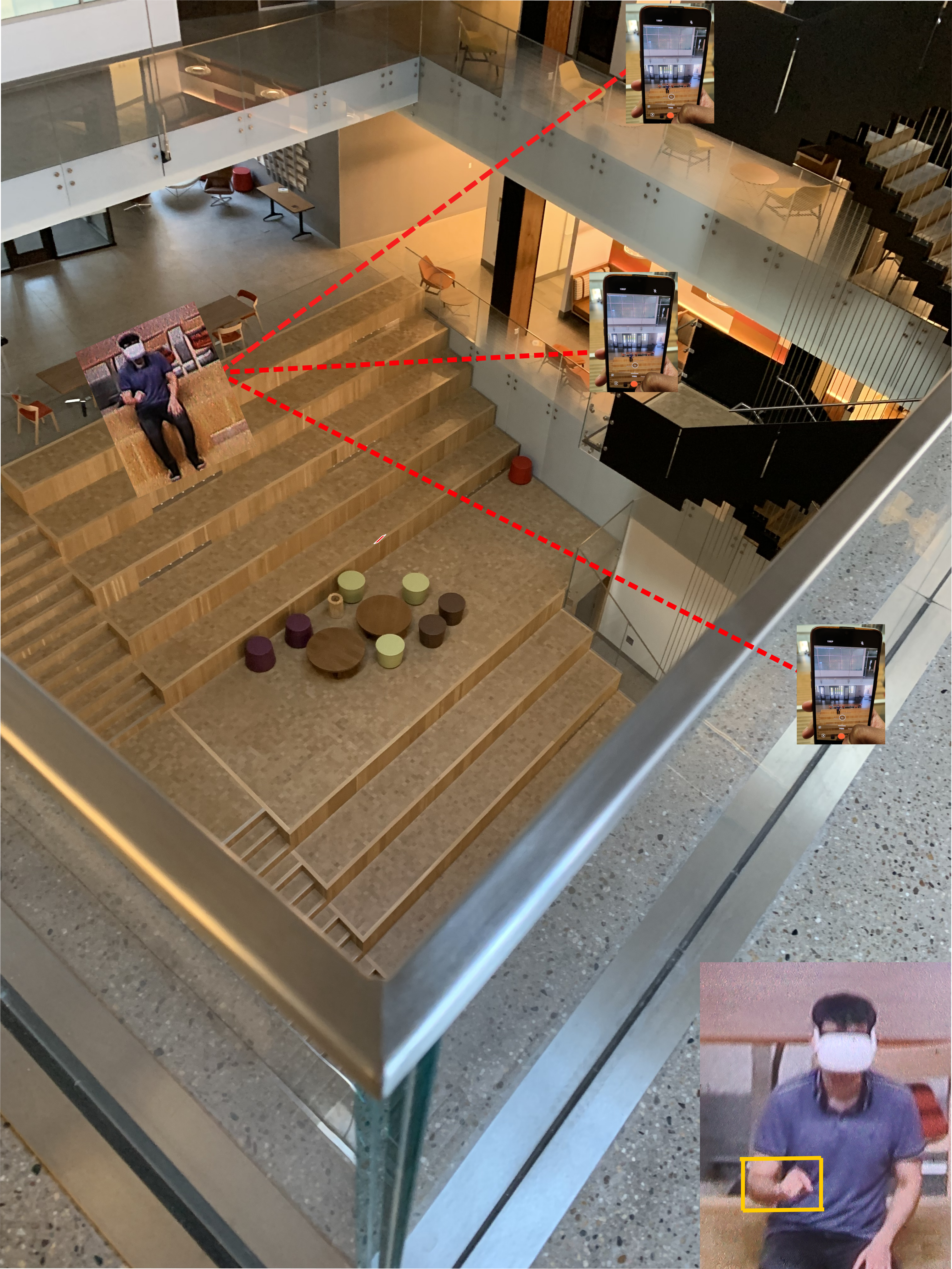
This project is supported in-part by the National Science Foundation (NSF) under Award No. 2340997, CAREER: BrainCAPTCHA: Completely Automated Test for User Verification using Dynamic Brain Biometrics.
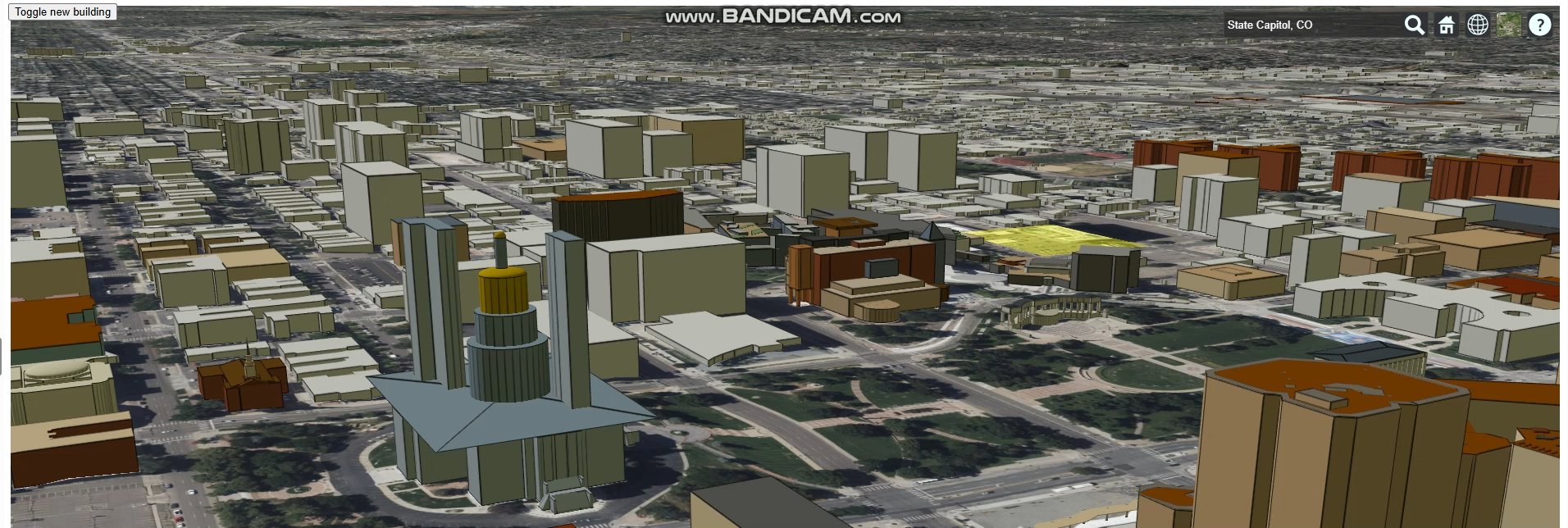
Trustworthy Digital Twin Technologies for Resilient Infrastructure
Physics-Aware 3D Scene Reconstruction Gaussian Splatting
This research direction develops object-decoupled, physics-aware, and interaction-ready Gaussian Splatting for mobile XR. The work focuses on scene representations that separate static background structure from individually addressable object-level splat sets, training methods that preserve this decoupled structure during optimization and fine-tuning, and runtime systems that support rigid-body physics, controller interaction, and headset-rate rendering on resource-constrained XR devices. By combining photorealistic reconstruction with object awareness and physical interactivity, this research aims to transform Gaussian Splatting from a frozen visual scene into a responsive mixed reality medium where users can pick up, move, and manipulate reconstructed objects naturally.
Efficiency, Reasoning, and Reliability in Multimodal Foundation Models
The work explores token-efficient multimodal architectures, such as Delta-LLaVA, that reduce computational overhead while maintaining strong visual–language performance. In parallel, it develops training-free segmentation and grounding approaches that leverage vision foundation models to improve spatial coherence and visual alignment without requiring additional model training. To better understand and mitigate unreliable outputs, the research also investigates the internal mechanisms of VLMs, analyzing how attention dynamics and intermediate representations influence grounding, reasoning, and hallucination behavior.
In addition to model and method development, this project contributes evaluation resources for multimodal reasoning, including new benchmarks such as MARS for studying spatial–symbolic mathematical reasoning in vision–language systems. By combining architectural innovation, interpretability-driven analysis, and targeted evaluation frameworks, this work aims to deepen our understanding of how multimodal models perceive, reason over, and compute with visual information while remaining computationally efficient and robust.
Computing Resources
Secure Sensing and Learning (SSL) Research Lab
- Motion Sensors - 12 wrist band kits with MetaMotionS+ Sensors.
- Mixed Realty Systems - two Apple Vision Pro headsets, two Magic Leap 2 headsets, HoloLens 2, Oculus Quest 2 (64GB), HTC Vive Focus 3 headset, Samsung Gear VR, DESTEK V5 VR headset.
- Hand-held smart wearables - 2 Samsung Galaxy S20 5G, 1 Apple iPhone 11 4G, 6 Apple iPhone SE (2nd generation), five Samsung Galaxy XCover Pro.
- Brain Signals for Biometrics Analysis - mBrainTrain Smarting Pro EEG system, Wearable Sensing DSI-24 ssytem, Wearable Sensing DSI-Flex system, CREMedical tEEG system, Zeto Inc. EEG System, Emotiv Epoc+ headset, 2 Emotiv EpocX headset, 2 EMOTIV Insight 5 Channel Mobile Brainwear®, Muse S headset.
- Side Channel Analysis - 2 Mansoon Power Monitors, Fluke 117 True RMS Multimeter.
- Video Tracking - 4 Azure Kinect DK system, two Cannon P950 cameras.
Artificial Intelligence Lab
- One Intel Core i9-10940X Deep Learning Workstation with 4 RTX 6000 GPUs from SabrePC.
- One AMD Threadripper 3975WX:32 cores, Deep Learning Workstation with 3 RTX A6000 GPUs (NVLinked).
- One AMD Threadripper 3975WX:32 cores, Deep Learning Workstation with 2 RTX A6000 GPUs (NVLinked).
Advanced Research Computing Center
NCAR Wyoming Supercomputing Center
Tools and Research Approach
We use methods and approaches drawn from probability theory, statistical learning, and game theory, etc.